


How to Choose Between Flat-Pack and Foldable Container Homes
Introduction
In the rapidly growing modular housing market, two container-based solutions stand out: flat-pack container homes and foldable container homes. Both are
designed for fast deployment, cost savings, and flexible applications, but they differ in design, transportation, and functionality. For B2B buyers in construction,
mining, disaster relief, or urban development, understanding the strengths and limitations of each type is crucial for making the right investment.
This article compares flat-pack and foldable container homes across design, transport, installation, durability, and cost—helping you decide which option best suits
your project needs.
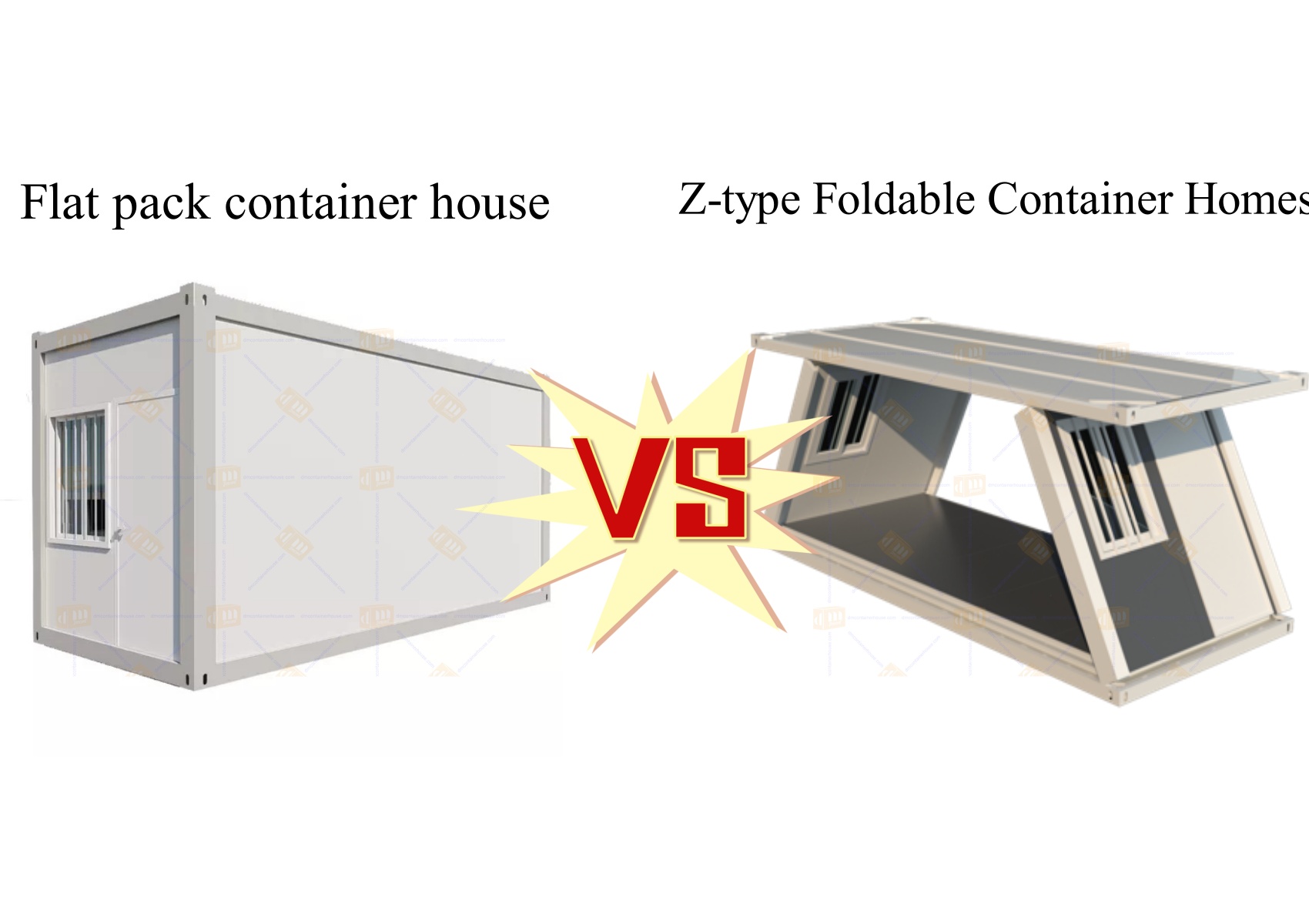
1. What Are Flat-Pack Container Homes?
Flat-pack container homes are prefabricated modular units shipped in a compact, disassembled form. Walls, floors, roofs, and fittings are packed flat to save space,
then assembled on-site.
Key Features:
Space-Saving Shipping: Four units can often be shipped in the space of one traditional container.
On-Site Assembly: Requires trained labor but straightforward installation.
Customization Options: Easy to adapt with interior layouts, insulation, and amenities.
Common Uses: Worker camps, schools, clinics, offices, and emergency housing.
2. What Are Foldable Container Homes?
Foldable container homes are pre-assembled units that can be folded down into a compact form for transport. Once on-site, they are unfolded and locked
into place, with minimal assembly required.
Key Features:
Quick Deployment: Units can be unfolded and ready within hours.
Compact Transport: Up to ten foldable units can fit in a 40ft shipping slot.
Built-in Fixtures: Many include pre-installed windows, doors, and wiring.
Common Uses: Disaster relief shelters, rapid deployment housing, mobile offices, and temporary accommodation.
3. Transportation Efficiency
One of the most critical considerations in modular housing is logistics.
Flat-Pack: Optimized for volume efficiency. Because parts are stacked flat, more units can be shipped per container load. Ideal for projects requiring hundreds
of units.
Foldable: Designed for speed and simplicity. More compact than fully-built units but slightly less efficient than flat-pack for bulk shipping. Ideal for urgent
projects where time outweighs shipping optimization.
4. Installation & Setup
Flat-Pack: Requires assembly on-site, including joining walls, flooring, and roofing. A small team with basic tools can typically complete a unit in 4–6 hours.
Foldable: Setup is faster, often 10 mins per unit, as most components are pre-integrated. Perfect for emergency or rotating housing needs.
5. Durability & Lifespan
Flat-Pack Homes: Generally more durable because walls and structures are thicker and can be reinforced during assembly. Lifespan often 15–20 years with
proper maintenance.
Foldable Homes: Prioritize portability and ease of use, so the structure may be slightly less robust than flat-pack. Lifespan typically 10–15 years depending
on environment and frequency of relocation.
6. Cost Considerations
Flat-Pack: Lower per-unit cost for large projects. Shipping efficiency and scalability make them highly cost-effective for bulk housing solutions.
Foldable: Slightly higher unit cost due to integrated design and pre-installed features.
However, the time savings on setup and reduced labor costs can offset the difference in fast-paced projects.
7. Applications: Which One Should You Choose?
Flat-Pack Container Homes are Best for:
Long-term worker accommodations (mining, oilfield, construction)
Schools, clinics, and community buildings in remote areas
Large-scale housing projects where cost efficiency is critical
Foldable Container Homes are Best for:
Disaster relief housing (earthquakes, floods, hurricanes)
Mobile military or humanitarian camps
Temporary or rotating project sites where relocation is frequent

8. Sustainability and Eco-Friendliness
Both flat-pack and foldable homes are more sustainable than traditional construction:
Recyclable Steel: Structures use steel frames that can be reused.
Reduced Construction Waste: Prefabricated elements minimize on-site debris.
Optional Solar Integration: Both can be fitted with renewable energy systems.
Flat-pack homes generally allow better insulation and energy efficiency, while foldable units excel in low-carbon rapid deployment scenarios.
Conclusion
Both flat-pack and foldable container homes offer innovative solutions for today’s diverse housing challenges. Your choice depends on project priorities:
If you need cost efficiency and durability for long-term use, choose flat-pack.
If you need speed and portability for emergency or rotating needs, go with foldable.
By aligning housing solutions with project goals, organizations can ensure comfort, cost-effectiveness, and operational success.
FAQs
Q1: Which option is cheaper—flat-pack or foldable container homes?
Flat-pack is generally cheaper per unit, but foldable units save money on labor and deployment speed.
Q2: How long do these homes last?
Flat-pack: 15–20 years. Foldable: 10–15 years with proper maintenance.
Q3: Can both be customized with bathrooms and kitchens?
Yes. Both options support modular add-ons like en-suite bathrooms, kitchens, and office setups.
Q4: Are these homes suitable for extreme climates?
Yes. With proper insulation, both can be adapted to hot deserts, cold mountains, or humid regions.
Q5: Which is better for disaster relief projects?
Foldable container homes are the preferred option due to their speed and simplicity in emergency deployment.
Your message-英文2024-12-24
Name*
Country*
Email*
Telephone*
For Personal Use/ Project (Click to Choose)
- Project
- Personal
Your Message*
Verification code


